
Perishable eCommerce
Case Study
Gardencup
CLIENT BACKGROUND
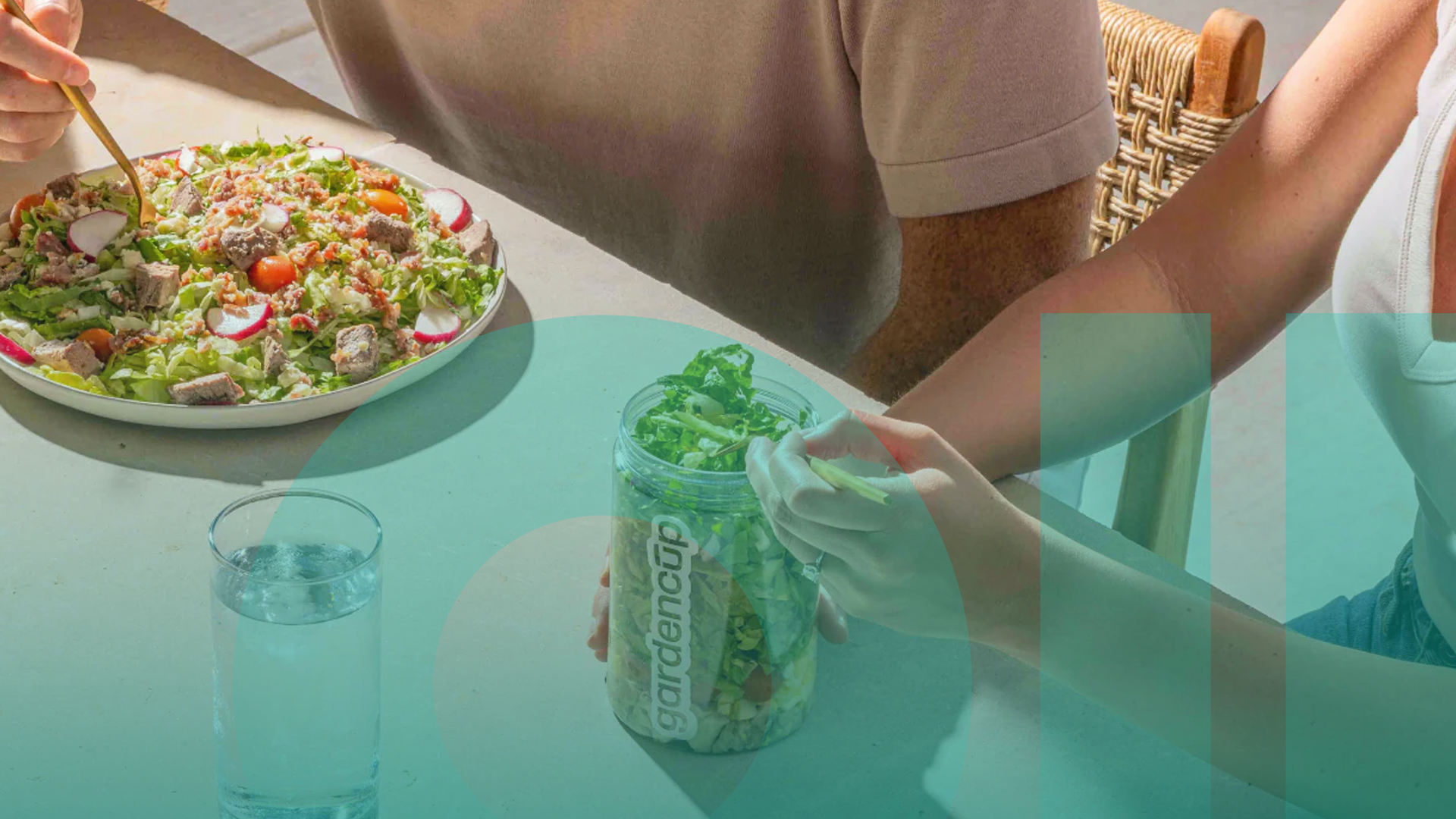
Founded by Brad Savage, Gardencup was built around a simple but demanding promise: fresh, ready to enjoy salads delivered directly to customers without compromising quality. The concept combined convenience, with restaurant grade ingredients- but delivering that freshness at scale required precision.
As the business grew from a strong regional base in Texas toward national distribution, maintaining consistent chilled conditions across long distance lanes became critical. For a product as temperature sensitive as fresh salads, cold chain performance was not just an operational detail. It was central to brand trust and long-term growth.
CLIENT REQUIREMENTS
Gardencup required a packaging system capable of protecting chilled, ready to eat meals through transit while maintaining product quality and presentation upon arrival.
Key priorities included:
• Maintaining consistent chilled temperatures across transit
• Protecting delicate fresh ingredients from temperature fluctuation
• Reducing spoilage and product waste
• Supporting operational efficiency in fulfilment
• Aligning with customer expectations around sustainability and presentation
• Enabling scalable growth without increasing risk
The system needed to work reliably across changing volumes and seasonal conditions, without adding complexity to packing operations.
UNIQUE PROJECT CHALLENGES
Freshly prepared salads operate within a narrow temperature band. Unlike frozen products, which tolerate subzero fluctuation, or ambient goods with wider stability margins, leafy greens and fresh components are highly sensitive to both heat gain and overcooling.
Excess heat accelerates respiration and reduces shelf life. Excess cooling can damage cell structure, alter texture, and compromise visual appeal. The system must hold steady, not simply remain cold.
Shipping from a single production base in Texas to all 50 states introduced additional variability. A box travelling to Phoenix experiences very different ambient exposure than one moving to Bangor, Maine. Transit duration, carrier dwell, and regional climate all influence performance.
Maintaining consistency across national lanes required deliberate coolant balancing, controlled barrier placement, and disciplined pack out execution. In chilled meal distribution, stability matters more than extremes.
THERMOGARD SOLUTION
Thermogard’s engineering and design team designed a customized chilled shipper system capable of maintaining thermal stability across long distance lanes while operating within real space constraints.
Because fresh salads require a narrow temperature band, the objective was controlled stability rather than maximum cooling. Coolant mass and placement were carefully balanced to prevent heat gain without overcooling delicate ingredients. Barrier configuration was refined to manage airflow and limit condensation.
Shipping nationally from one Texas location influenced several factors of the solution; material selection, pack out design, and a highly tailored supply chain strategy. The system needed to protect product integrity, with tight shipment volumes and delivery cadence to enable Gardencup to improve space efficiency within a constrained footprint, all while meeting tight cost parameters.
Thermogard’s customer-first, partnership approach to both packaging and supply chain design meant the result was a stable, scalable chilled distribution system built for consistency.
END RESULT
Following the implementation of the full pack out solution, Gardencup recorded an immediate reduction in customer complaints related to temperature and product condition.
With approximately 45,000 salads shipping each week, even small improvements in stability translated into meaningful operational and brand impact. Consistency improved across lanes, spoilage risk reduced, and customer confidence strengthened.
The refined system provided a stable foundation for scaling growth, allowing Gardencup to expand volume nationally while maintaining control over freshness and delivery performance.
Reliable chilled distribution moved from being a point of vulnerability to a platform for scale.